14
Oct
British Tweed – The Story
 Shooting Party with Edward Prince of Wales 1895 wearing British TweedBritish tweed is famous all over the world but not many people know that it has nothing to do with the River Tweed. The name was as a result of a mere slip of a pen.
The word "tweed" is believed to come from when Watsons of Hawick invoiced James Locke of Regent Street London in 1841 for some "tweel" (the Scottish name for the cloth at the time because of its twilled appearance). However, the word was carelessly written down and was read as "tweed". The common belief of its link to the Tweed River was a natural one and so the name stuck.
British Estate Tweeds can be said to be a distant relative of the Clan Tartans, as they both identify a group of people:
Tartan identify members of the same family wherever they live.
Estate tweeds identify people who live and work in the same area even if they are not related.
Shooting Party with Edward Prince of Wales 1895 wearing British TweedBritish tweed is famous all over the world but not many people know that it has nothing to do with the River Tweed. The name was as a result of a mere slip of a pen.
The word "tweed" is believed to come from when Watsons of Hawick invoiced James Locke of Regent Street London in 1841 for some "tweel" (the Scottish name for the cloth at the time because of its twilled appearance). However, the word was carelessly written down and was read as "tweed". The common belief of its link to the Tweed River was a natural one and so the name stuck.
British Estate Tweeds can be said to be a distant relative of the Clan Tartans, as they both identify a group of people:
Tartan identify members of the same family wherever they live.
Estate tweeds identify people who live and work in the same area even if they are not related.

History of British Tweed
One of the old traditions of the Highlands was that the chiefs provided some clothing for their retainers in the clan tartan. As ownership of Scottish estates changed, new tenants and owners wanted to follow this tradition but they had no "right" to wear a tartan. The story goes that the first Estate Tweed was "born" when General Balfour of Balbirnie rented the Glenfeshie Estate between 1834 and 1841, the General's daughter was "disturbed because she had no tartan". So she designed a check, based on the Shepherd check, the traditional tweed of the Border shepherds, but with a scarlet overcheck. She felt that this gave her a "tartan" for her staff, which the ghillies and keepers all wore right into recent history. This check later developed into the Gun Club checks.
Lovat Tweed and the first Camouflage
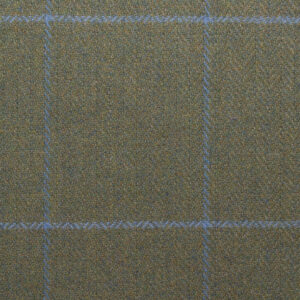 However, there was another reason for the creation of estate tweeds, and that was the need to blend in with the background of the mountain and moor to provide a camouflage for the stalkers when they were on the hill when pursuing the red deer of Scotland.
No doubt the first of these was the Lovat tweed which was first woven for Lord Lovat in the 1840s, when he pointed out how the colours of the sands, heather, bracken and bluebells, and birches on his estate at Loch Morar blended together when seen from a distance, and it was from this blend that the original Lovat mixture was made.
Also around the same time, Lord Elcho created his tweed for the new London Scottish Regiment. He felt it wrong that soldiers should be wearing so conspicuous a colour as bright scarlet, and had this idea of camouflage in mind as a solution. This tweed, commonly known as the "Elcho mixture", led onto the khaki uniform now worn in many versions everywhere.
However, there was another reason for the creation of estate tweeds, and that was the need to blend in with the background of the mountain and moor to provide a camouflage for the stalkers when they were on the hill when pursuing the red deer of Scotland.
No doubt the first of these was the Lovat tweed which was first woven for Lord Lovat in the 1840s, when he pointed out how the colours of the sands, heather, bracken and bluebells, and birches on his estate at Loch Morar blended together when seen from a distance, and it was from this blend that the original Lovat mixture was made.
Also around the same time, Lord Elcho created his tweed for the new London Scottish Regiment. He felt it wrong that soldiers should be wearing so conspicuous a colour as bright scarlet, and had this idea of camouflage in mind as a solution. This tweed, commonly known as the "Elcho mixture", led onto the khaki uniform now worn in many versions everywhere.
Queen Victoria and Prince Albert build Balmoral Castle in Scotland
 Scotland became very popular helped by Sir Walter Scott's novels and his enthusiasm for tartans in the early part of the 19th century, and further by Queen Victoria and Prince Albert. In 1848 Prince Albert bought the estate of Balmoral from the Farquharsons of Inverey, and when the foundation stone of Balmoral Castle was laid in 1853 one for the first things that Prince Albert did was to design the Balmoral Tweed for use by all the stalkers and ghillies on the estate. Again, it was created to provide camouflage.


Share: